
How Mashgin Recognizes Items: Accuracy, Fresh Food, and New Products
.jpg)
How accurate is Mashgin at identifying items?
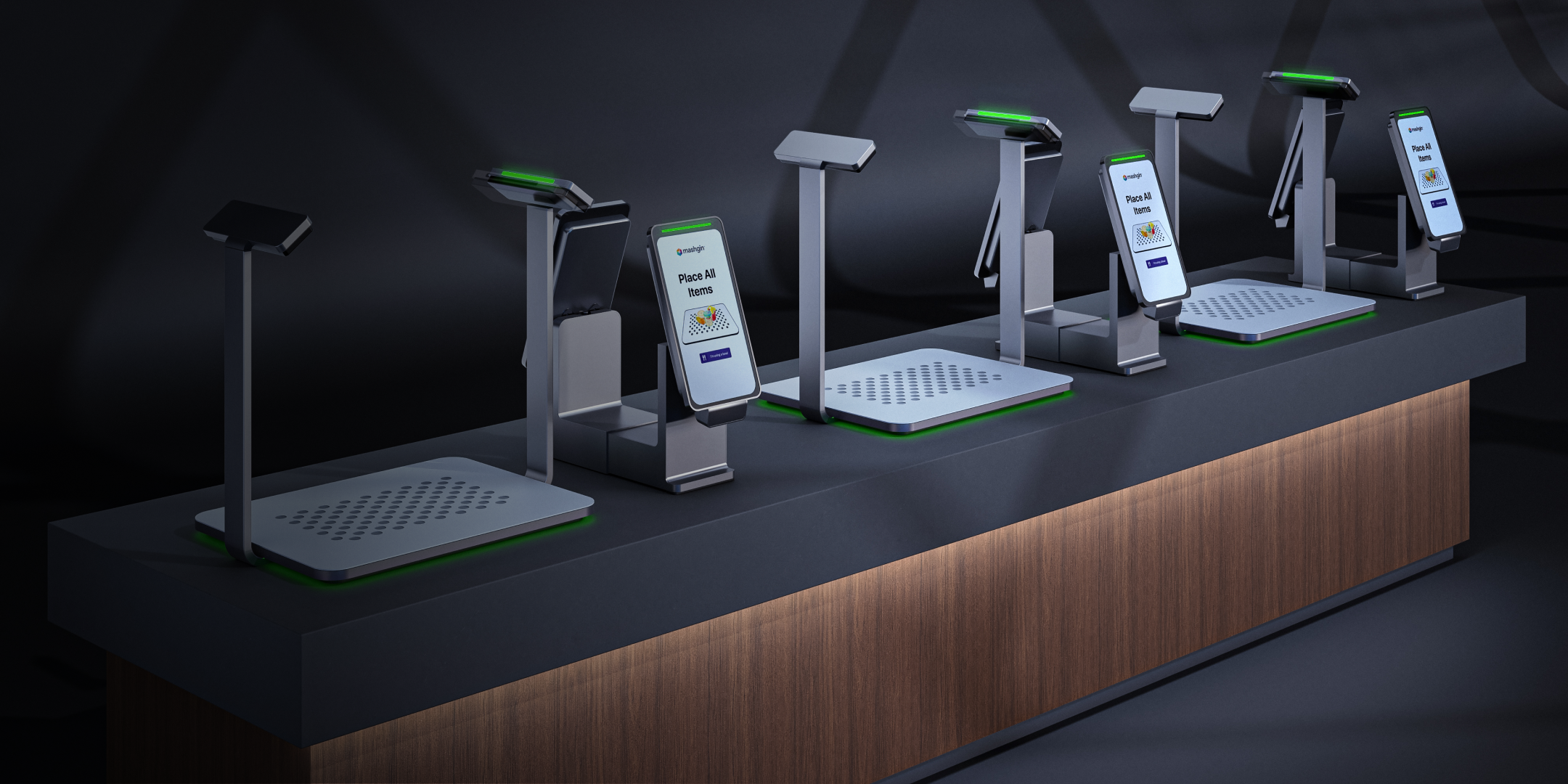
Mashgin is 99.9% accurate at identifying items, as long as the item is in the pricebook and has been trained. It builds a real-time 3D model of every item on the tray from multiple cameras, so it can separate look-alike products and crowded trays that single-camera systems miss.
Does Mashgin work with fresh or made-to-order food?
Yes. Mashgin recognizes items by shape, size, and color, not barcodes, so it identifies hot food, salads, fountain drinks, and produce, including their packaging. Cleveland Clinic's cafeteria, for example, uses Mashgin to ring up packaged food, grab-and-go items, and made-to-order hot food in a single transaction.
How does Mashgin learn new or seasonal products, and who does that work?
Adding a new item takes about 60 seconds, and either the customer or Mashgin's team can do it. Mashgin has learned from more than 1.7 billion transactions, so it already recognizes a large library of common products. At deployment, a location only needs to add items unique to it.
Mashgin's largest customers, including food service companies like Aramark, Sodexo, and Compass Group and convenience chains like Circle K, add new products as they launch, and some keep dedicated kiosks in their labs for this. For new sites, Mashgin's deployment team loads the menu before opening. At one campus deployment, Keith Wilson said the team helped "get almost 1,000 items in the system before we opened."
.jpg)
.jpg)
By providing your phone number or initiating a text conversation with Mashgin, you consent to receive SMS messages related to support updates, existing cases, account notifications, and service alerts.Message frequency may vary. Message and data rates may apply. You can reply STOP at any time to opt out.For more information, please review our Privacy Policy and Terms of Service.