
Mashgin vs. Other Visual Checkout Systems
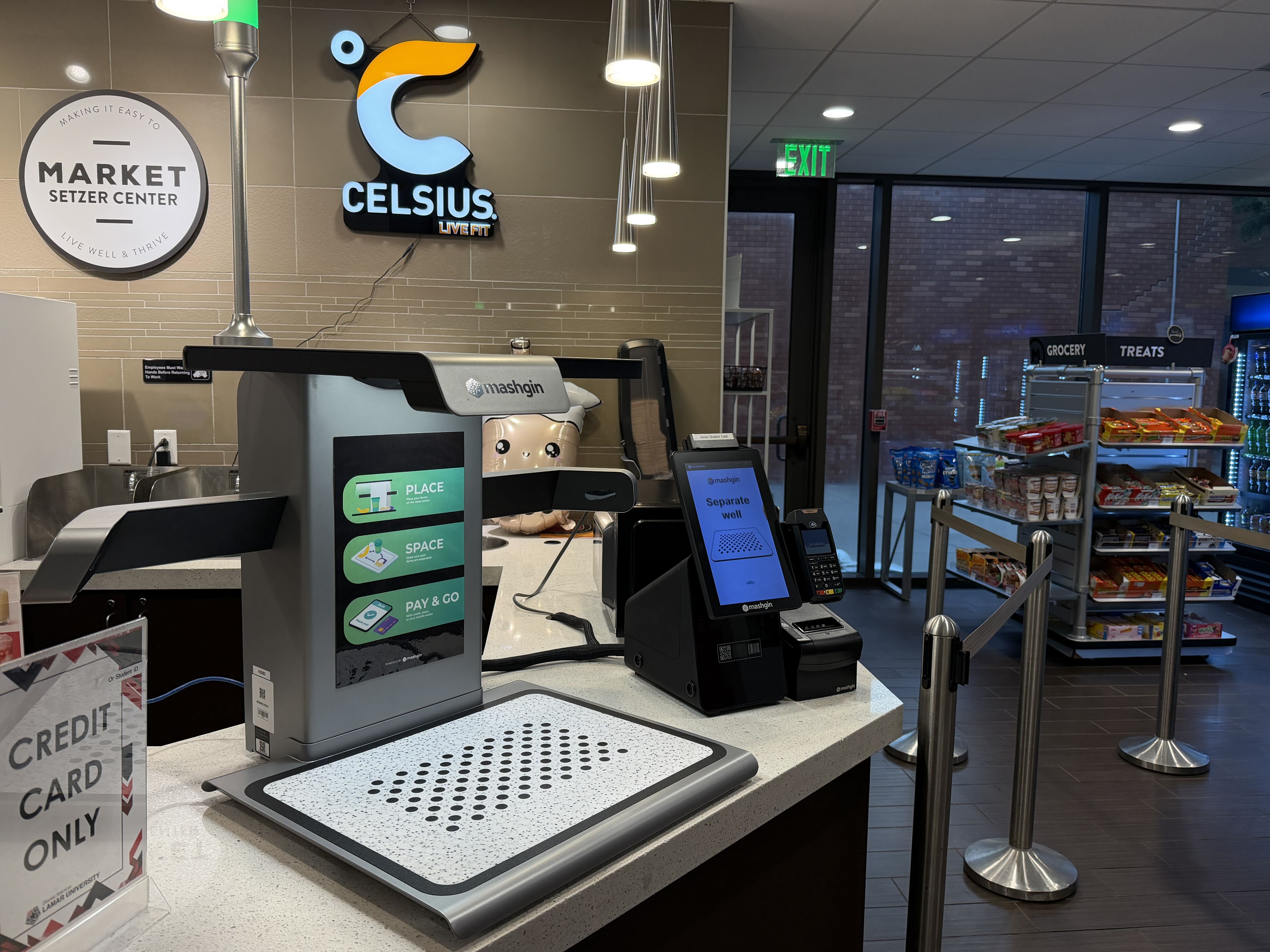
Should I buy Mashgin or VisioLab (or MyVenue, Toshiba, Deligo, Canteen, Caper, or NCR Halo)?
Mashgin differs from other visual checkout systems in three ways. It uses patented multi-camera 3D vision instead of single flat images. It has the largest deployment base, with 5,000+ locations, 1.7 billion+ transactions, and 44 million+ monthly shoppers. And its pricing is fixed rather than per transaction, so costs don't rise as volume grows. Single-camera systems can work for small, low-volume locations. They struggle with crowded trays, look-alike items, and large pricebooks.
1. 3D vision instead of flat images
A single camera sees a flat picture. From above, two sizes of the same energy drink can look identical, and items on a crowded tray can hide each other, so the system sees fewer items than are actually there.
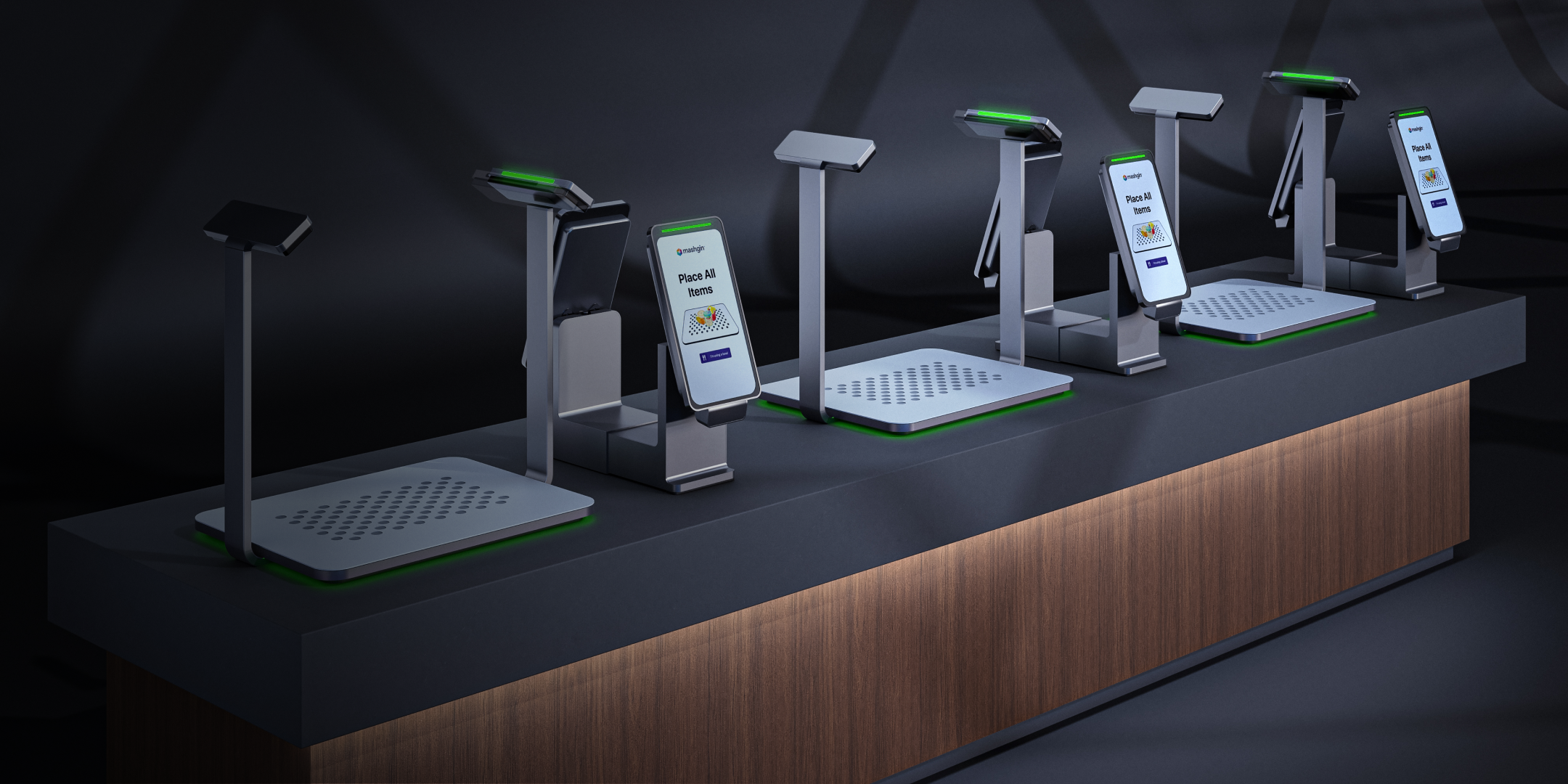
Mashgin uses 8 cameras arranged in stereoscopic pairs, like human eyes. Each pair perceives depth, and Mashgin combines all the angles into a 3D point cloud of everything on the tray. That lets it measure shape, size, and position, which is how it tells a small coffee from a large one and counts items that are partly hidden. The result is 99.9% accuracy on hard cases: crowded trays, items that come in several sizes, and pricebooks of 5,000+ items.
Small accuracy gaps matter a lot at checkout. Here's the math for an average cart of 3 items:
<tr><th scope="row">Item accuracy</th><td>99.9%</td><td>95%</td></tr><tr><th scope="row">Items misidentified per 1,000</th><td>1</td><td>50</td></tr><tr><th scope="row">Carts with at least one error</th><td>about 0.3% (1 in 334)</td><td>about 14% (1 in 7)</td></tr>
At 95% accuracy, roughly one in seven transactions is charged wrong or needs a staff member to step in. That undermines the labor and speed benefits the system is supposed to deliver.
2. Scale and training data
In AI, the volume of real-world data drives accuracy. Mashgin has run more than 1.7 billion transactions and serves more than 44 million shoppers a month across 5,000+ locations.
3. Fixed pricing that scales with volume
Mashgin starts at $1,000 per month per kiosk, about $33 per day, including hardware, with no per-transaction fees.
VisioLab's published pricing for its stadium and cafeteria "Growth" plan (checked September 2026) has two options:
- Monthly plan: $399/month for software, plus $69/month to lease hardware, plus 3.0% and $0.10 per transaction (American Express excluded).
- Annual plan: $407/month including hardware, plus 1.8% and $0.03 per transaction.
VisioLab's transaction fee includes card processing.
Estimated daily cost for one station, assuming a 30-day month and a $10 average cart:
<table><thead><tr><th scope="col">Transactions per day</th><th scope="col">Mashgin</th><th scope="col">VisioLab monthly plan</th><th scope="col">VisioLab annual plan</th></tr></thead><tbody><tr><th scope="row">100</th><td>$33</td><td>$56</td><td>$35</td></tr><tr><th scope="row">200</th><td>$33</td><td>$96</td><td>$56</td></tr><tr><th scope="row">400</th><td>$33</td><td>$176</td><td>$98</td></tr><tr><th scope="row">600</th><td>$33</td><td>$256</td><td>$140</td></tr></tbody></table>
Most operators deploying visual checkout target at least 200 transactions per machine per day, where VisioLab's per-transaction fees outweigh Mashgin's fixed price on either plan.
By providing your phone number or initiating a text conversation with Mashgin, you consent to receive SMS messages related to support updates, existing cases, account notifications, and service alerts.Message frequency may vary. Message and data rates may apply. You can reply STOP at any time to opt out.For more information, please review our Privacy Policy and Terms of Service.