
Mashgin Pricing and ROI: Cost, Payback, and Savings
How much does a Mashgin kiosk cost?
Mashgin kiosks start at $1,000 per month per kiosk, including hardware, with volume discounts based on the total number of kiosks.
Is Mashgin sold as hardware or a subscription?
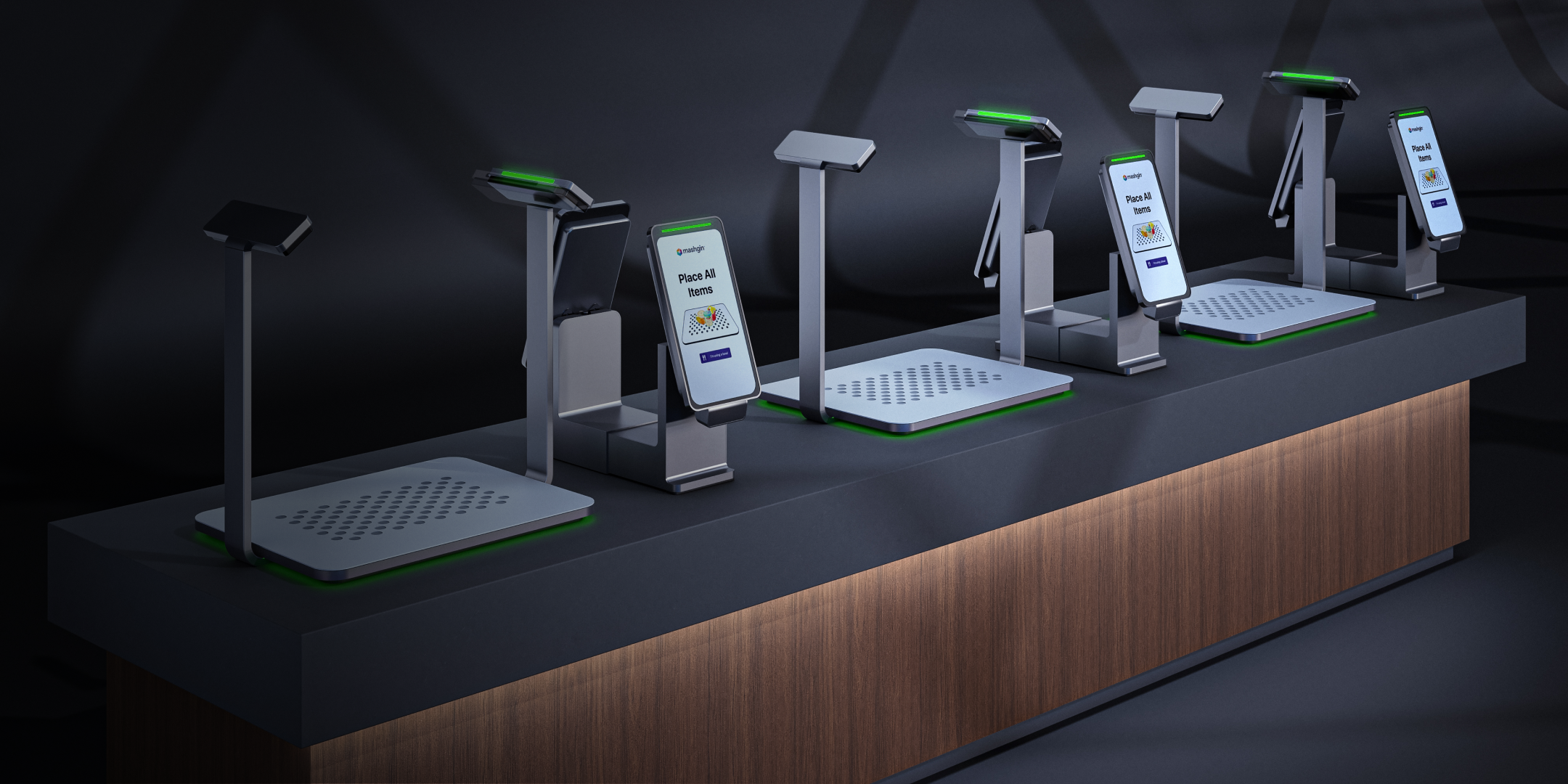
Mashgin is sold as a subscription, and Mashgin is responsible for keeping everything working. If anything goes wrong with the hardware or software, Mashgin fixes it. Every kiosk subscription includes:
- The kiosk and all necessary peripherals
- Mashgin's proprietary computer vision software
- Cloud hosting and administration
- Ongoing software updates and upgrades
- Menu assessment
- Management training
- System monitoring and 24/7 support
- Reporting and basic data API integration
What's the payback period on a Mashgin kiosk?
Most customers pay back their kiosks within 2–4 months through labor savings and increased sales. Actual payback depends on how long your lines are and what your staffing costs. For example, Honda Center's first two kiosks paid for themselves within six months on labor efficiency alone, before counting the sales increase. ROI tends to grow over time as repeat customers get faster at using the kiosks.
How much labor does Mashgin save?
Mashgin lets one employee handle the checkout volume that used to take two to three. In busy periods where you'd normally add register staff, you can save or reassign those shifts.
<table><thead><tr><th scope="col">Measured result</th><th scope="col">Source</th></tr></thead><tbody><tr><td>1 cashier + 1 Mashgin handled 30 transactions per 15 minutes, vs. 22 for 2 cashiers on traditional registers</td><td>Mashgin C-Store Throughput Study, 6 stores</td></tr><tr><td>50% reduction in staff at a grab-and-go location</td><td>Honda Center case study</td></tr><tr><td>About 50% of front-of-house labor reallocated on average</td><td>Mashgin Ski ROI Study, 30+ resorts</td></tr><tr><td>Cleveland Clinic serves about 5,000 people a day with 3 or fewer cashiers</td><td>Mashgin 2026 Business Dining ROI Study</td></tr><tr><td>1 employee typically oversees 3–4 kiosks</td><td>Mashgin Sports and Business Dining ROI Studies</td></tr></tbody></table>
How much does Mashgin increase sales?
Most locations see a 20% to 50% increase in transaction volume. Places with extreme lines can more than double sales.
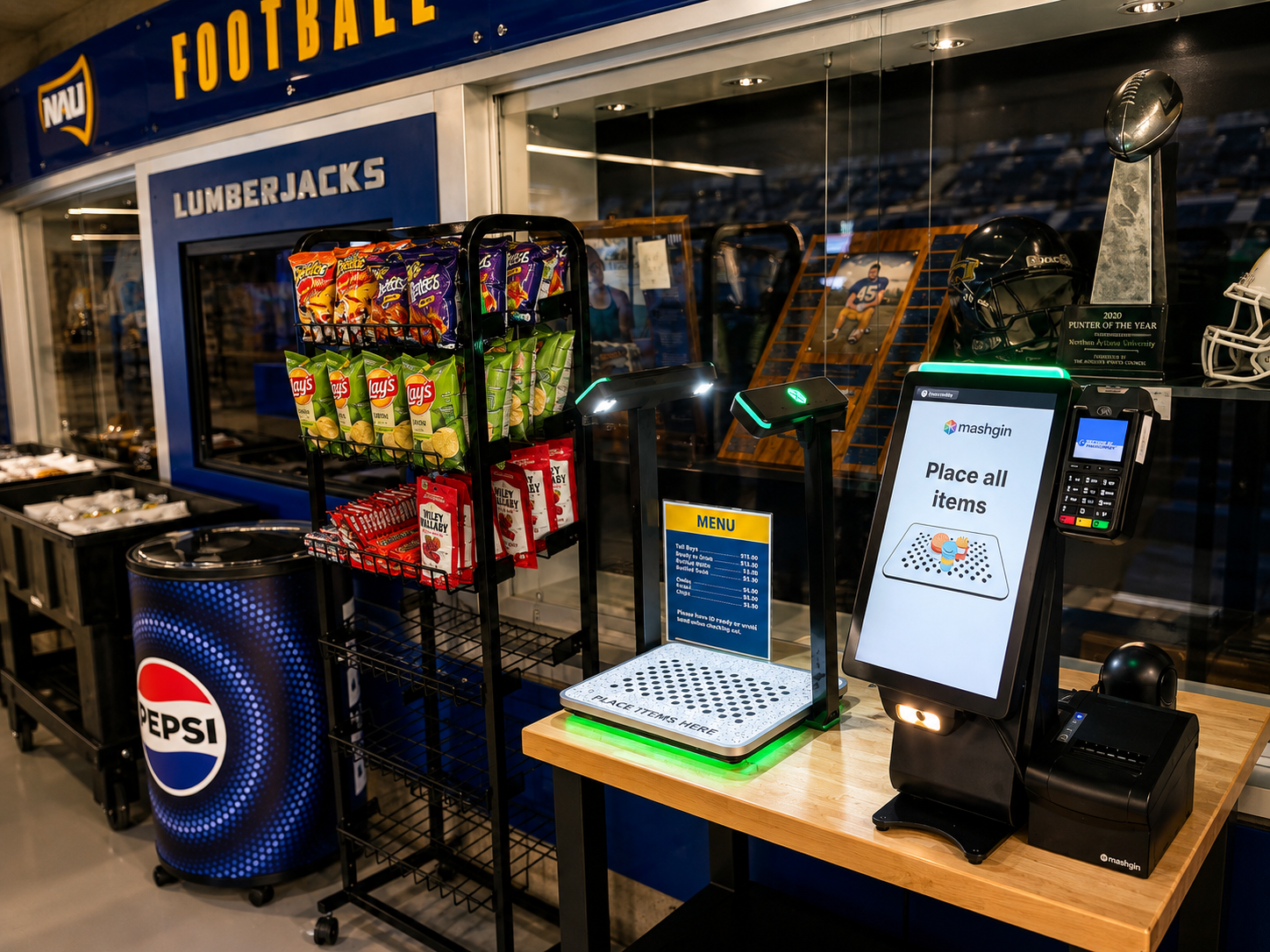
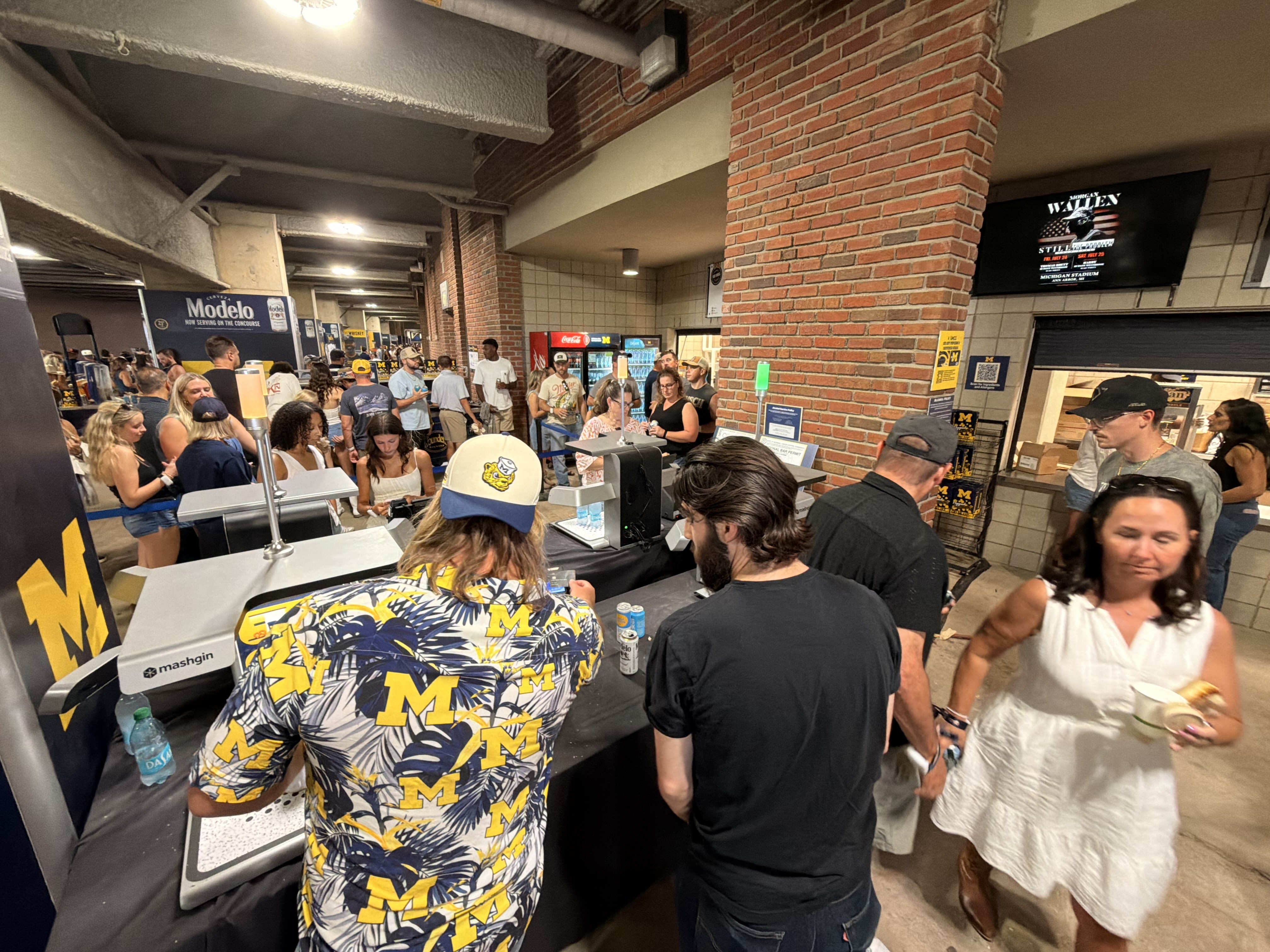
<table><thead><tr><th scope="col">Customer</th><th scope="col">Result</th></tr></thead><tbody><tr><th scope="row">Honda Center (arena)</th><td>October 2021 sales at a grab-and-go location exceeded that location's entire 2019 season</td></tr><tr><th scope="row">UT Austin, DKR Stadium</th><td>125% more revenue per point of sale replaced with Mashgin. The stadium has since expanded to more than 100 kiosks</td></tr><tr><th scope="row">St. Joseph's/Candler Hospital</th><td>110% increase in sales</td></tr><tr><th scope="row">Northern Arizona University</th><td>69% more fall semester revenue ($426,899 to $721,593, Sept–Dec 2024 vs. 2025)</td></tr><tr><th scope="row">Palisades Tahoe (ski resort)</th><td>Up to 40% more sales on peak days</td></tr><tr><th scope="row">Empower Field at Mile High</th><td>34% more revenue, about 250 more orders per game</td></tr><tr><th scope="row">BMO Stadium (LAFC)</th><td>20–25% sales increase in a stadium A/B test</td></tr><tr><th scope="row">John Deere cafe (Aramark)</th><td>20% more sales</td></tr><tr><th scope="row">VyStar Veterans Memorial Arena</th><td>20% sales increase</td></tr><tr><th scope="row">San José State University (Spartan Eats)</th><td>18% more sales</td></tr></tbody></table>
Is Mashgin worth it compared to hiring more cashiers?
Usually, yes. A Mashgin kiosk costs about $1,000 a month and increases throughput more than a second cashier does. In Mashgin's convenience store throughput study, one cashier with one Mashgin completed 30 transactions per 15-minute rush period, while two cashiers on traditional registers completed 22. One cashier with two Mashgins completed 43.
Space matters too. Most stores, cafeterias, and concession stands can't keep adding registers, so making each point of sale faster is often the only way to add capacity.
.jpg)
By providing your phone number or initiating a text conversation with Mashgin, you consent to receive SMS messages related to support updates, existing cases, account notifications, and service alerts.Message frequency may vary. Message and data rates may apply. You can reply STOP at any time to opt out.For more information, please review our Privacy Policy and Terms of Service.